
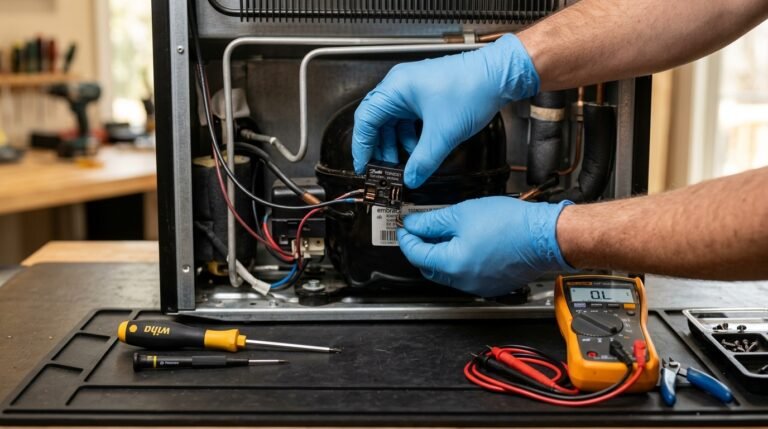
Appliance Repair vs Replacement Cost Guide
Decide whether to repair or replace your home appliances in the GTA using the 50%...
Read More →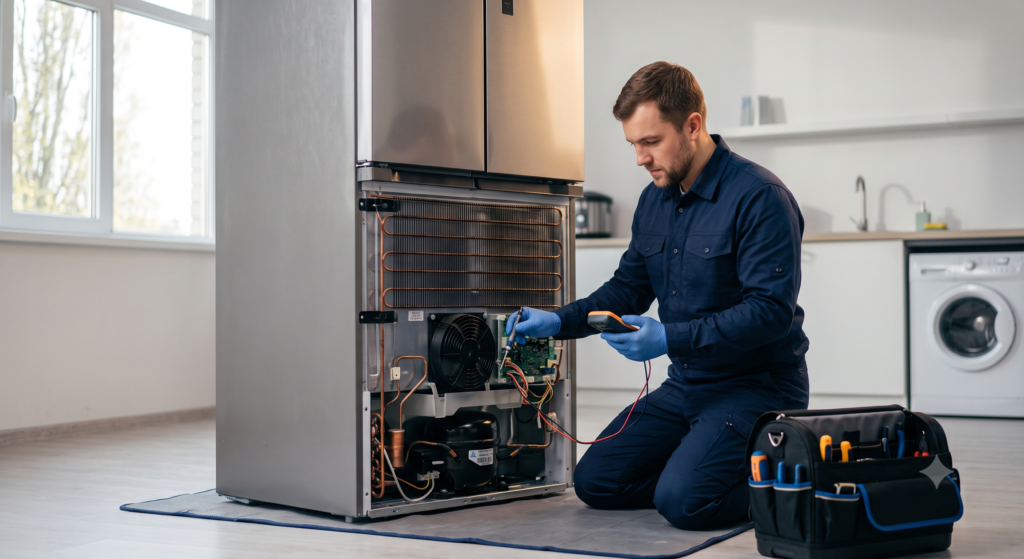
If your refrigerator is not cooling but the interior light is still on, the issue is typically caused by dirty condenser coils, blocked air vents, or a faulty door seal. In many cases, you can restore your appliance’s performance and save on unnecessary service fees by performing a few quick checks before calling for professional help.
A functional internal light indicates that the refrigerator is successfully receiving electrical power, which helps narrow down the problem to mechanical or circulation issues. With over a decade of experience in the appliance repair industry, I have identified the most common culprits that homeowners can safely address without specialized equipment.
When your refrigerator fails to maintain the correct temperature, it is often due to accumulated dust or simple airflow blockages rather than a catastrophic part failure. Before deciding to book a professional repair, I recommend inspecting these seven critical areas to see if you can resolve the issue immediately.
If you have followed these steps and your refrigerator still fails to maintain proper temperatures, an internal component failure—such as a broken start relay, a failed compressor, or a faulty evaporator fan—is likely to blame. At A-Repair, we prioritize the longevity and ecological efficiency of your appliances, ensuring that every repair aligns with factory standards. Our technicians in Etobicoke are experts at diagnosing complex issues, leveraging deep technical knowledge to provide lasting solutions. We pride ourselves on transparent, premium service, ensuring that your household continues to run smoothly without the stress of recurring breakdowns.
The interior light operates on a separate electrical circuit from the cooling system, so a working bulb only proves that the fridge is receiving power. The failure usually lies in a specific component responsible for heat exchange, such as the compressor or the evaporator fan motor.
A failing compressor often produces a repetitive clicking noise as it attempts to start, followed by silence. If the compressor housing feels extremely hot to the touch or if you hear no humming sound, you likely need professional diagnostic assistance.
Yes, performing a manual defrost is perfectly safe, but it requires patience to ensure all internal ice buildup has fully melted. We recommend keeping food in a cooler during this 24-hour period to ensure your items remain at safe temperatures while the appliance rests.
Decide whether to repair or replace your home appliances in the GTA using the 50%...
Read More →
Discover how hard water damages GTA appliances, the warning signs of mineral scale, and how...
Read More →
Discover 7 diagnostic checks for home appliances spiking your electric bill and learn how professional...
Read More →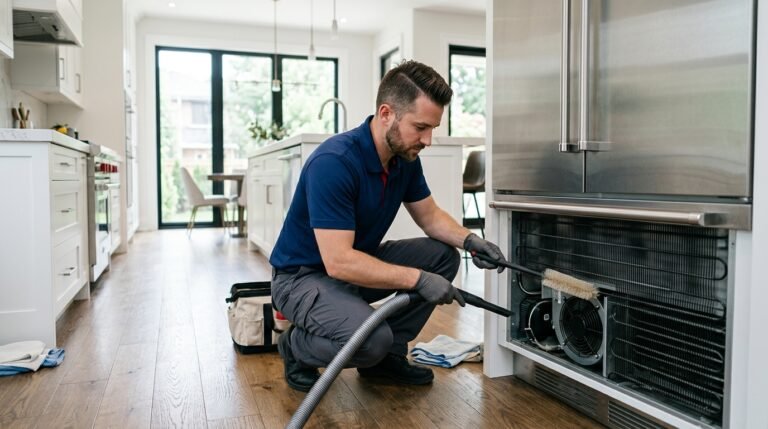
Learn 7 essential maintenance practices to extend your home appliance lifespan by 5 to 7...
Read More →Contact us right now!